
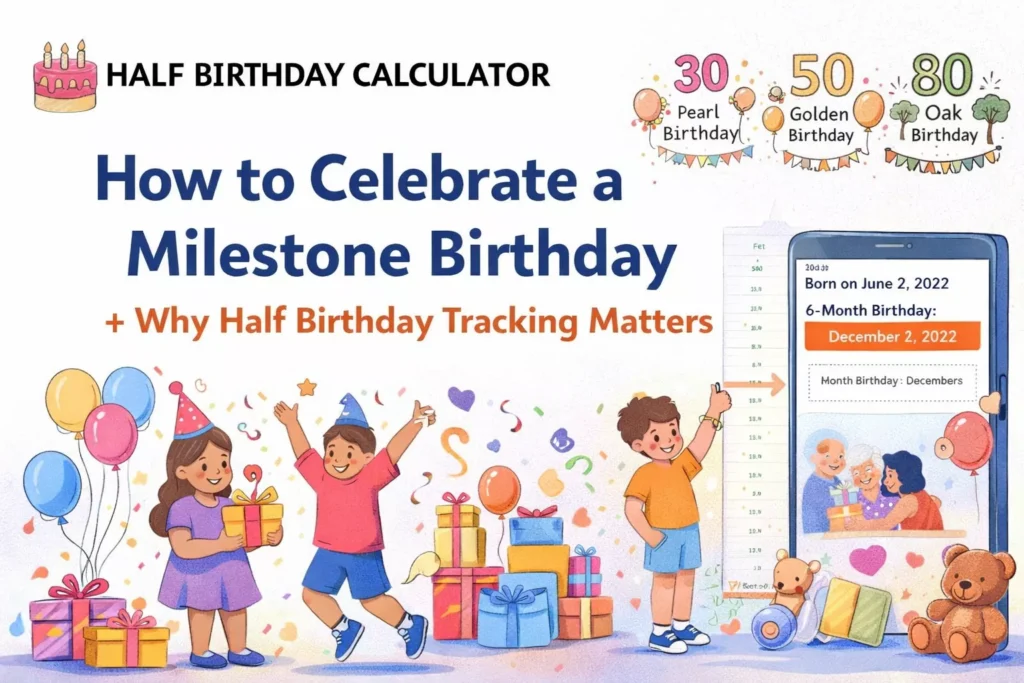
Milestone birthdays are significant events in life, such as turning 1, 5, 10, 16, 18, 30, 50, and beyond. These birthdays mark key stages of growth and achievement, often celebrated with parties, reflection activities, and gifts. Tracking half birthdays also allows for better developmental insight, especially in early childhood.
Whether you’re planning a milestone birthday for your child or celebrating your own, it’s crucial to understand the meaning behind these events and how to mark them in a meaningful way. Celebrating milestone birthdays with a focus on growth and development is essential, especially for children, as it gives you the opportunity to pause, reflect, and track their progress.
But what about half birthdays? These offer another unique opportunity to track growth—specifically when it comes to early childhood milestones.
What Is a Milestone Birthday?
A milestone birthday is a significant birthday that marks an important stage of life. In the U.S., common milestone birthdays include ages 1, 5, 10, 16, 18, 21, 30, 40, 50, 60, 80, and 100. These birthdays are typically celebrated with special parties, activities, and traditions that reflect personal growth and life achievements.
Milestone birthdays are crucial because they highlight key moments of personal development. These celebrations serve as a rite of passage, whether it’s your child’s first birthday or a grandparent’s 80th.
For instance, the 1st birthday marks the first full year of life, and a child’s 16th birthday symbolizes reaching driving age in many states. These events are typically celebrated with memorable parties, gifts, and reflection on the growth that has taken place.
In adult milestones, turning 30 is often a transition from youth to adulthood, and turning 50 marks the halfway point in life for many. These are symbolic moments, where we often reflect on the years that have passed and set goals for the future.
90% of brain development occurs before age 5 (Source: NIH).
Why Tracking Half Birthdays Matters
Half birthdays allow parents to track their child’s development every six months. This provides a more accurate view of their growth and milestones, rather than waiting for a full year. For young children, half birthdays help monitor early physical, emotional, and cognitive milestones.
While full birthdays mark significant life stages, half birthdays can be just as meaningful, especially for young children. These milestones offer a way to track growth on a biannual basis and can help you spot developmental trends early on.
Studies show that early childhood milestones such as walking, speaking, and social interactions predict later academic success and emotional well-being
The Psychological Benefits of Tracking Milestones
Research has shown that celebrating milestones, no matter how big or small, can improve self-esteem in children. When you celebrate a half birthday, it reinforces a sense of achievement and progress, helping children feel recognized and valued.
For parents, keeping track of half birthdays allows for a more nuanced understanding of their child’s development. Instead of waiting for a full year to pass, half birthdays offer a chance to reflect on progress and celebrate achievements in smaller, more manageable intervals.
Real Developmental Milestone Chart (0–18 Years)
Tracking milestones over time provides a structured approach to understanding your child’s growth. Below is a developmental milestone chart for ages 0 to 18. These milestones are based on CDC guidelines, which help identify key physical, emotional, and cognitive achievements.
| Age | Physical | Cognitive | Social/Emotional |
|---|---|---|---|
| 0-6 Months | Lifts head, pushes up when lying on tummy | Begins to babble | Smiles at people |
| 6-12 Months | Rolls over, sits with support | Imitates sounds, understands “no” | Has preference for caregivers |
| 1 Year | Walks, crawls, picks up small objects | Understands simple words | Separation anxiety |
| 2 Years | Walks well, begins running | Builds sentences | Shows more independence |
| 3 Years | Jumps, climbs stairs | Follows 2-3 step instructions | Begins to play with other children |
| 5 Years | Skips, hops, can draw shapes | Starts to read simple words | Strong friendships form |
| 10 Years | Coordination improves | Learns multiplication, simple math | Strong sense of self-identity |
| 16 Years | Begins driving (in some states) | Independent thinking, high school math | Increased social life, friendships deepen |
| 18 Years | Fully developed motor skills | College, career path awareness | Adult social life and relationships |
Celebrating Half Birthdays: A Modern Tradition
Half birthdays are a fantastic way to celebrate growth in children, especially in the first few years of life. Instead of just celebrating at the end of the year, parents can track their child’s progress every six months. This can be done with small family gatherings or a special reflection activity.
While full birthdays are major celebrations, half birthdays provide an intimate way to celebrate development. For young children, this provides parents with a more consistent tracking method.
Creative Half Birthday Celebration Ideas
-
Create a Milestone Time Capsule
Fill it with memories from the past six months, including photos, toys, and any special notes about milestones achieved. -
Growth Chart
Measure and mark the child’s height and weight, or record any physical achievements. Display it prominently as a reminder of the progress. -
Mini Reflection Ceremony
Share a story or an accomplishment that your child has achieved over the past six months. This makes the event feel like a personal celebration of growth.
How to Use an Online Half Birthday Calculator
An online half birthday calculator helps you easily track your child’s half-birthday date. By entering your child’s birth date, the calculator will automatically provide you with the exact date of their half birthday, saving you time and eliminating the need for manual calculation.
Using a half birthday calculator streamlines this process, ensuring accuracy and efficiency. You simply input your child’s birth date, and the calculator does the work by providing the exact half-birthday date, six months later. This tool accounts for leap years, month length differences, and more.
Printable Milestone Trackers for Parents
One effective way to keep track of milestones is by using printable milestone charts and journals. These tools can be used to record important achievements in your child’s development every six months.
Here are a few ideas for printable milestone trackers:
-
Development Journal: Record key events, words, and activities every six months.
-
Growth Chart: Track your child’s height and weight milestones.
-
Memory Book: A keepsake for capturing photos, handprints, and artwork at key milestones.
-
Achievement Badges: Create personalized milestone badges that your child can proudly display.
Milestone Birthdays by Decade
Milestone birthdays by decade are celebrated as significant personal achievements. Here’s how the U.S. commonly marks milestone ages by decade:
-
30th Birthday: Pearl Birthday – Transition into adulthood and career stability.
-
40th Birthday: Ruby Birthday – A time for self-reflection and celebration of achievements.
-
50th Birthday: Golden Birthday – Halfway through life, typically a big celebration with family and friends.
-
80th Birthday: Oak/Platinum Birthday – A time for honoring life and sharing wisdom with the younger generations.
-
100th Birthday: Centennial Celebration – A rare and profound milestone, celebrated by family and friends.
Common Mistakes Parents Make When Celebrating Milestones
-
Overspending on Large Parties: Sometimes the best celebrations are simple, intimate gatherings that focus on the child’s growth rather than materialism.
-
Ignoring Emotional Reflection: Celebrations should include acknowledging the child’s development and achievements, not just the party.
-
Forgetting to Capture Memories: Every milestone—whether full or half—should be documented in some way, whether through photos, journals, or keepsakes.
Final Thoughts
Celebrating milestone birthdays and tracking half birthdays are powerful ways to mark progress in life. Whether it’s your child’s first birthday or your own 50th, it’s important to celebrate growth—physical, emotional, and intellectual.
Using tools like the half birthday calculator ensures that you’re able to track development accurately while celebrating in meaningful ways. Celebrate your milestones every six months or every decade—and remember that growth is something to be proud of, every step of the way.
FAQs
1: What is a milestone birthday?
Answer:
A milestone birthday is a significant age that marks an important life stage, such as 1, 5, 10, 16, 18, 21, 30, 40, 50, 60, 80, or 100. These birthdays are often celebrated with parties or reflective activities, signifying growth, achievements, and transitions in life.
2: What is the difference between a half birthday and a full birthday?
Answer:
A half birthday is celebrated exactly six months after a person’s birthday, while a full birthday occurs once a year. Half birthdays are especially useful for tracking early childhood developmental milestones and providing an extra celebration throughout the year.
3: Why should I celebrate my child’s half birthday?
Answer:
Celebrating your child’s half birthday allows you to track their development every six months, making it easier to recognize key milestones. This helps parents monitor progress in areas like speech, motor skills, and social development, and offers a chance to celebrate achievements twice a year.
4: How do I calculate a half birthday?
Answer:
To calculate a half birthday, simply add six months to the person’s birth date. For accuracy, use an online half birthday calculator to account for month length variations and leap years.
5: What should I do for my child’s half birthday?
Answer:
For your child’s half birthday, you can celebrate with intimate family gatherings, growth chart updates, or a mini reflection ceremony. It’s also a great opportunity to mark developmental achievements and encourage self-esteem by acknowledging progress over the past six months.
6: What is the 30th birthday called?
Answer:
The 30th birthday is often referred to as the Pearl Birthday, symbolizing wisdom gained over three decades and the transition into a new phase of life, often marked by increased maturity and career stability.
7: What is the 80th birthday called?
Answer:
The 80th birthday is commonly known as the Oak Birthday or Platinum Birthday, representing strength, endurance, and the celebration of a life well-lived.
8: How can I track my child’s development with half birthdays?
Answer:
Tracking your child’s development with half birthdays allows you to monitor physical, emotional, and cognitive growth every six months. Use printable milestone trackers, memory books, or online tools like the half birthday calculator to assess their achievements and provide regular celebrations.
9: Why do milestone birthdays matter?
Answer:
Milestone birthdays matter because they mark important achievements and transitions in life. These celebrations allow us to reflect on personal growth, whether it’s a child’s developmental progress or an adult’s reflection on their career and life journey.
10: How does a half birthday calculator work?
Answer:
A half birthday calculator automatically calculates the date that falls exactly six months after your child’s birthday. Simply input the birth date, and the calculator will provide the precise half birthday date, accounting for leap years and varying month lengths.
Read Also: 5 Best Half Birthday Party Ideas for Kids + Easy Celebration Tips